Please Note: From Monday 1 June 2026, we will no longer be accepting referrals via S1.
Patients can self-refer by calling 01482 335627 or by completing our online referral.
If patients are unable to self-refer, you can refer them into the service on one of the forms below:
If in doubt as to which form you should complete, please contact the service.
|
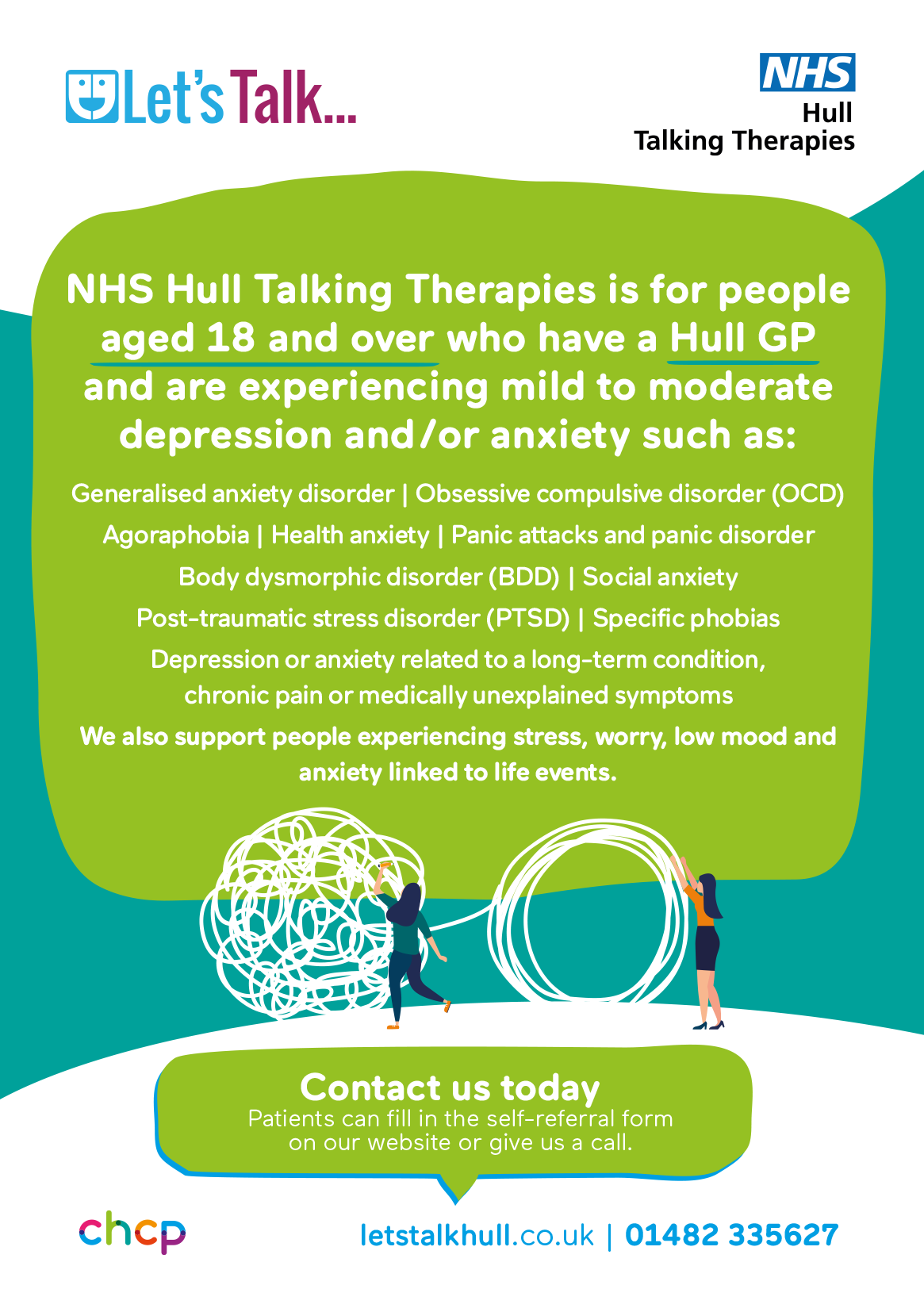
NHS Hull Talking Therapies is for people aged 18 and over who are registered with a Hull GP and are experiencing mild to moderate depression and/or common anxiety difficulties such as:
- Generalised anxiety disorder
- Obsessive-compulsive disorder
- Agoraphobia
- Health anxiety
- Body dysmorphic disorder
- Social anxiety
- Panic attacks and panic disorder
- Post-traumatic stress disorder
- Specific phobias
- Depression or anxiety related to long-term condition, chronic pain, or medically unexplained symptoms
We also support people experiencing stress, worry, low mood or anxiety linked to life events.
You can download a copy of our information booklet for GPs here.
We offer a number of different talking therapies including:
- Introduction to Cognitive Behavioural Therapy (CBT) psychoeducation course focused on anxiety and depression, usually followed by a one-to-one course of treatment
- Low-Intensity CBT
- High-Intensity CBT
- Interpersonal therapy (IPT)
- Counselling for Depression (CFD)
- Eye Movement Desensitisation and Reprocessing (EMDR)
- Couples counselling for depression - when one or both partners are depressed and this is affecting the relationship (CCFD)
We are unable to provide treatment for people who are under 18 and not registered with a Hull GP, or who are seeking support where one of the following are the primary difficulty:
- Crisis intervention
- Requests for diagnosis
- Medication reviews or medication management
- Severe or complex mental health difficulties (for example: psychosis; bipolar disorder; or significant emotional or personality difficulties).
- Neurodevelopmental conditions (for example: autism; ADHD; or Tourettes syndrome)
- Eating disorders
- Addictions (for example: alcohol; drugs; sex; or gambling).
- Anger management or emotional regulation